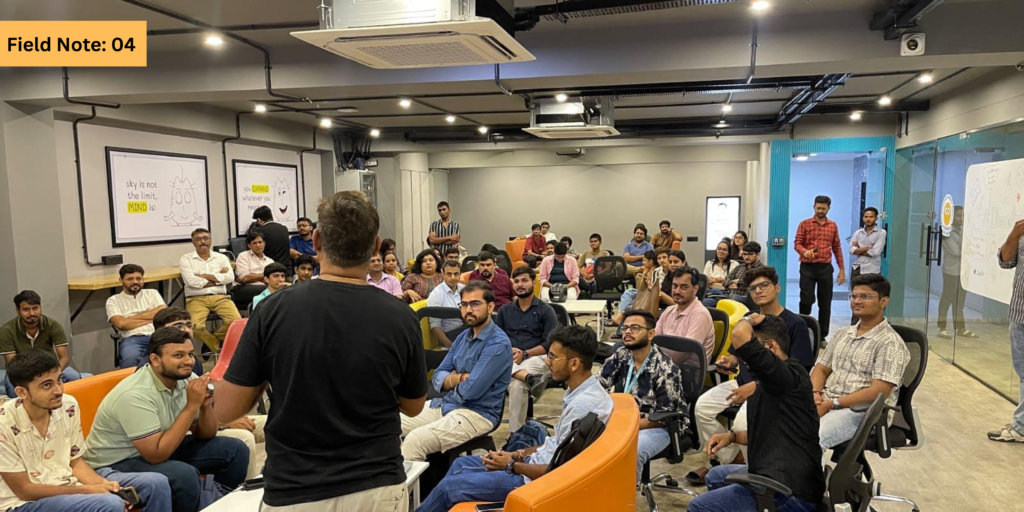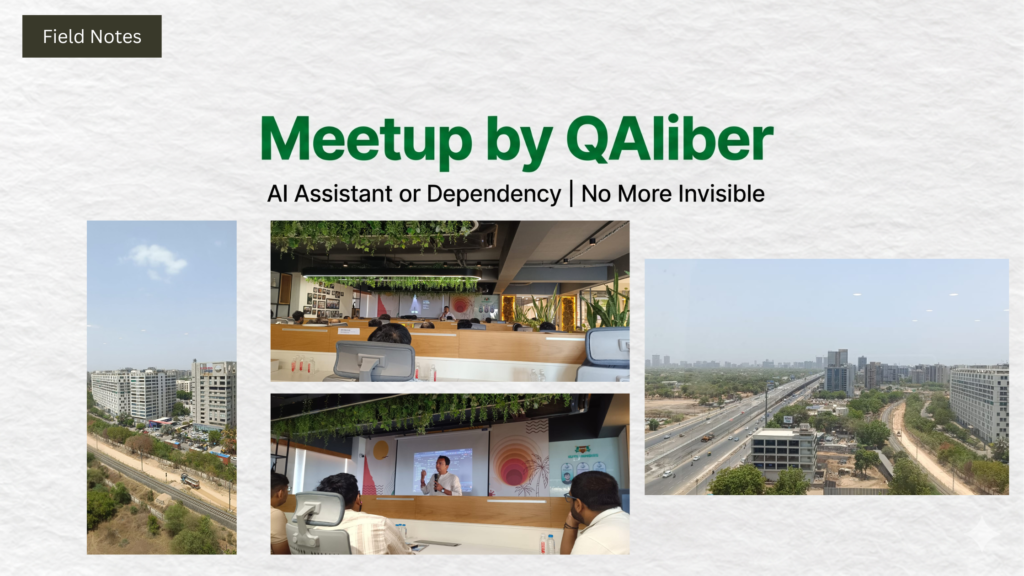
There is a different kind of energy in a room when the people on stage are not speaking about possibilities but about systems they have already built.
That was the atmosphere at IBM Gandhinagar during CSQA AgentiX 2026, a community meetup focused on AI, Agentic Systems, Intelligent Automation, and the future of Quality Engineering.
The event brought together QA leaders, automation specialists, and AI practitioners who are actively experimenting with autonomous testing workflows. Across every session, one message became impossible to ignore:
“QA is not disappearing. QA is evolving into something far more autonomous than most teams imagined even two years ago.”
What made this event particularly valuable was that the discussion wasn’t about futuristic concepts. It was about practical implementations already being used today.
The Five-Year Arc Nobody Talks About
Most AI discussions jump directly to the future.
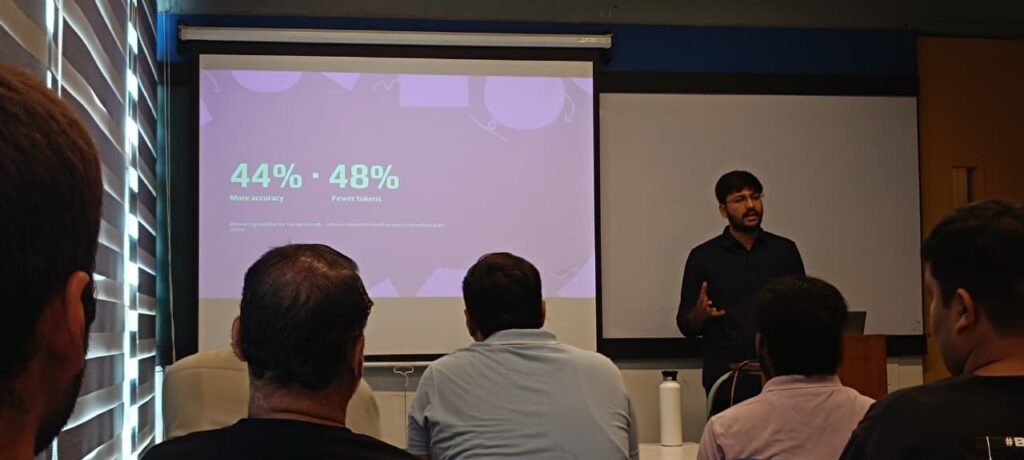
Rishil Bhatt took a different approach.
He walked the audience through how AI adoption in Quality Engineering actually unfolded.
The journey started in early 2024 with AI-assisted test case generation. At the time, many teams viewed it as a productivity enhancement rather than a transformation.
By late 2024, AI-powered plugins started generating automation code.
In 2025, prompt engineering and reasoning models entered QA workflows, helping engineers create test scenarios, analyze failures, and improve automation coverage.
Then came one of the most important developments in the agentic ecosystem:
The Rise of MCP
Model Context Protocol (MCP) became the bridge connecting AI models with enterprise systems, tools, repositories, and databases.
What makes MCP interesting is not the technology itself but the speed at which it has been adopted.
Industry reports show MCP server downloads grew from approximately 100,000 in November 2024 to more than 8 million by April 2025. By 2026, the ecosystem had expanded to over 10,000 active MCP servers connecting AI agents with tools such as GitHub, Jira, Slack, databases, cloud platforms, and internal enterprise systems.
Those numbers matter because they indicate something larger than a trend.
They signal infrastructure adoption.
The internet was built on protocols such as HTTP.
The agentic era appears to be building on MCP.
Rishil described where we are today as “Dark Factory Mode.”
The concept comes from manufacturing, where automated factories can operate without human presence.
What does “dark factory mode” mean for quality assurance?
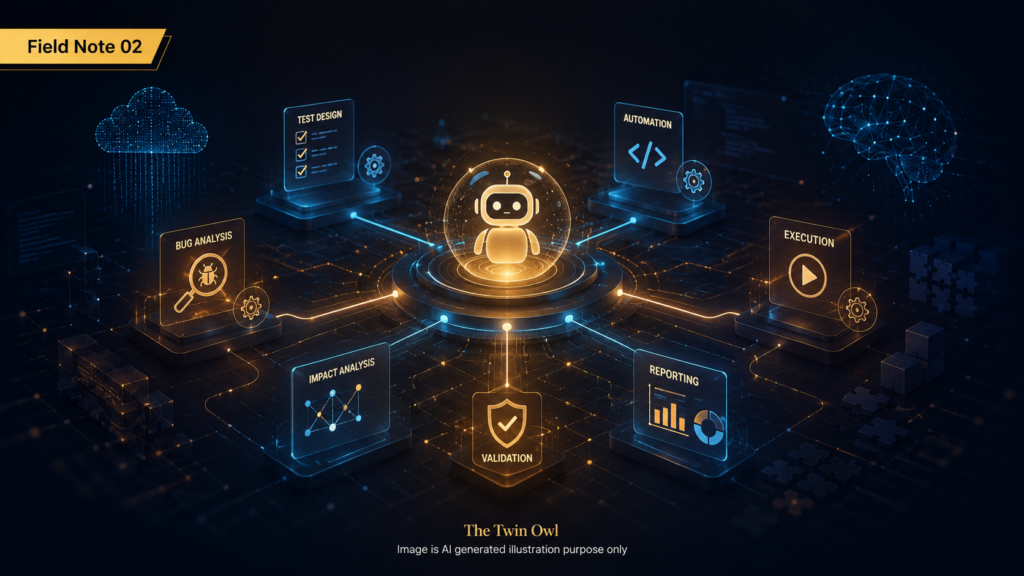
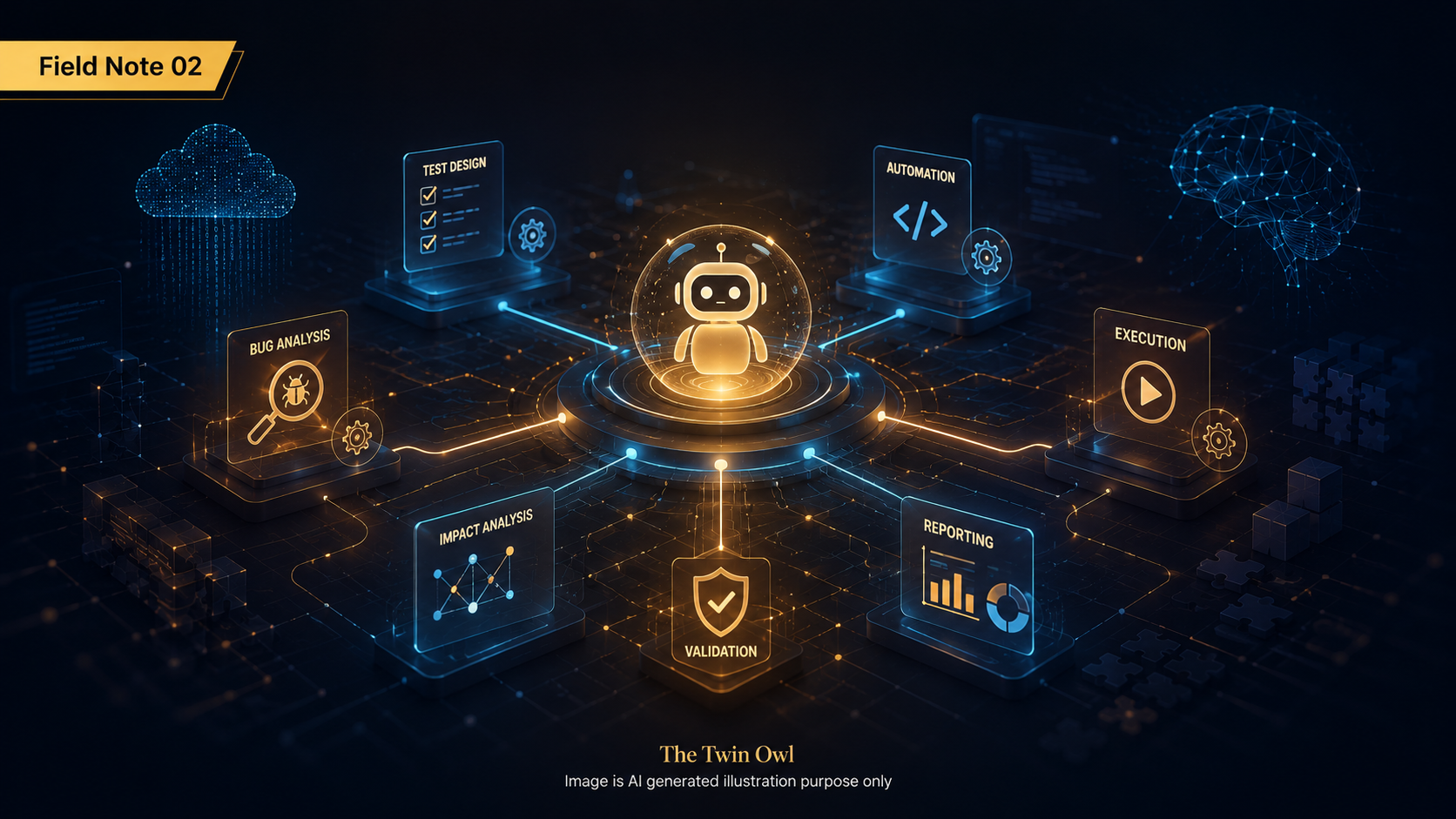
Applied to quality assurance, dark factory mode refers to autonomous systems that perform critical testing activities with minimal human intervention. These AI-powered workflows help teams improve efficiency, reduce manual effort, and accelerate software delivery.
Generate tests
AI agents automatically create functional, regression, API, and edge-case test scenarios based on requirements, user stories, or application behaviour.
Execute tests
Autonomous systems run test suites continuously across environments, reducing manual execution effort and improving release confidence.
Analyze failures
Intelligent agents investigate failed test cases, identify root causes, and distinguish genuine defects from false positives.
Create reports
Automated reporting provides actionable insights, testing summaries, quality trends, and release readiness metrics in real time.
Trigger workflows
AI systems can initiate CI/CD pipelines, execute remediation steps, update tickets, and coordinate actions across connected tools.
Escalate issues
Critical defects are automatically prioritised and routed to the right stakeholders, ensuring faster response and resolution.
“The goal isn’t to remove humans from testing. It’s to remove humans from the parts of testing that never needed a human in the first place.”
with minimal human intervention.
The implication is clear:
Every six months, AI has absorbed another layer of QA work. There is little evidence that this pace is slowing down.
Beyond Scripts: When AI Starts Investigating Bugs
One of the most talked-about demonstrations came from Kinjalk Jain.
His session, “Beyond Scripts: Unleashing Autonomous Intelligence in Software Testing,” showcased a Bug Impact Analyzer that felt less like a testing tool and more like a digital investigator.
The workflow was surprisingly simple.
A user enters a bug ID.
How an AI-powered bug impact analyzer works
Instead of manually investigating defects across repositories, dependencies, and tickets, an autonomous bug impact analyzer can trace issues, identify affected systems, and generate actionable insights in minutes.
Finds relevant code
The system automatically locates the source code associated with the reported bug and identifies where the issue originates.
Analyzes dependencies
AI examines connected services, APIs, libraries, and components to understand how the defect impacts the broader application.
Identifies affected modules
The system maps impacted modules, features, and workflows to reveal potential downstream risks.
Generates impact analysis report
A comprehensive report is automatically created, highlighting affected areas, severity, risk levels, and recommendations.
Suggests potential fixes
Based on historical patterns and code analysis, AI recommends possible solutions and remediation paths.
Pushes findings directly to Jira
Reports, recommendations, and impacted areas are automatically synced with Jira, reducing manual documentation effort.
Result: Faster root-cause analysis, improved collaboration, reduced investigation time, and quicker issue resolution.
No manual tracing.
No searching through repositories.
No dependency mapping by hand.
What stood out wasn’t just the technology.
It was the elimination of context switching.
Traditionally, QA engineers spend significant time moving between Jira, repositories, documentation, and communication tools.
Agentic systems are beginning to collapse those activities into a single workflow.
Under the hood, the solution leveraged the OpenAI SDK with a Jira MCP Server, demonstrating how modern AI systems can orchestrate multiple tools without requiring custom integrations for every use case.
For practitioners looking to experiment, Kinjalk shared the FreeLLMAPI repository, which lowers the barrier to testing multiple LLMs without enterprise-scale costs.
The End of Brittle Locators?
If you’ve worked in automation long enough, you’ve experienced locator failures.
A small UI change.
A renamed class.
A modified DOM structure.
Suddenly, hundreds of tests start failing.
Pratik Gajjar tackled this problem with a session titled:
“AI-Driven Locator Strategies for Intelligent Test Automation.”
His framework introduces an agent capable of:
Crawling web pages
Understanding DOM structures
Generating robust locators
Detecting locator failures
Creating alternative locators automatically
Rather than treating broken locators as maintenance work, the system treats them as a solvable automation problem.
Pratik described two operating modes:
| Discovery Mode | Healing Mode |
| Generate new locators automatically. | Repair existing broken locators without human intervention. |
Each locator is scored against factors such as:
- Uniqueness
- Stability
- Change resistance
- Long-term maintainability
This is where agentic QA becomes tangible.
Not a chatbot attached to a testing framework.
A system that observes, reasons, adapts, and repairs itself.
The final panel featured
While earlier sessions focused on possibilities, the panel focused on responsibilities.
Several themes repeatedly surfaced.
1. LLM Firewalls Are Becoming Essential
As AI agents gain access to enterprise systems, security becomes a first-class concern.
The question is no longer:
“Can an agent access a system?”
The question is:
“Should it?”
The panel discussed the growing need for LLM firewalls and governance layers that control:
- Tool access
- Data access
- Permission boundaries
- Sensitive information exposure
2. Regulated Industries Face Different Challenges
Healthcare and finance cannot adopt agentic systems using the same risk tolerance as other industries.
A wrong recommendation in e-commerce might be inconvenient.
A wrong recommendation in healthcare could be dangerous.
This shifts the conversation from automation efficiency to trust, explainability, and governance.
3. Testing AI Is Different from Testing Software
One of the most valuable insights of the day was this:
Traditional software is deterministic.
Agentic systems are not.
A login form either works or doesn’t.
An AI agent may produce different responses for the same intent depending on context, memory, tool availability, and reasoning paths.
Testing therefore expands beyond output validation.
Teams must also evaluate:
- Reasoning quality
- Consistency
- Reliability
- Hallucination risks
- Safety boundaries
This requires entirely new testing strategies and skill sets.
Resources Shared During the Meetup
A framework for managing agent memory and long-term contextual recall.
As AI agents become more autonomous, memory management may become as important as prompt engineering.
Also Read: The psychology of AI resistance — why smart people reject tools that would help them
The Room, In One Sentence
If there was one sentence that captured the entire event, it was this:
The goal isn’t to remove humans from testing. It’s to remove humans from the parts of testing that never needed a human in the first place.
Author’s Take
After spending a day listening to practitioners who are actively building agentic testing systems, one conclusion became difficult to ignore:
Traditional QA processes will not remain unchanged.
We are witnessing the transition from script-driven testing to agent-driven quality engineering.
The opportunity for QA professionals is not to compete with AI on repetitive work.
AI is already becoming good at generating test cases, writing automation code, analyzing defects, and maintaining locators.
The bigger opportunity is to identify the gaps where human judgment is still required.
Find the processes that still rely on manual coordination.
Find the decisions that still depend on context and experience.
Then explore how agentic systems can support or automate them.
But there is one principle I believe should remain constant.
Human-in-the-loop is not optional.
An agent may generate a test case.
An agent may identify a bug.
An agent may even suggest a fix.
Yet someone still needs to validate whether the outcome is correct, safe, and aligned with business goals.
Autonomous does not mean unsupervised.
The future of QA is not humans versus AI.
It is humans building systems capable of doing more than humans could do alone.
Also Read: Field Notes: Navigating AI and Visibility at the QAliber Meetup